

It’s time to look back on 2025! Check our blog between Christmas and New Year’s for a variety of stories and memories of 2025 from the staff of the Wildlife Center of Virginia.
My memory for this year comes from a transition we have been preparing for since last year—one that naturally made me look back not just on 2025, but on the twenty-some years I have spent in this place.
The Wildlife Center’s current facility was built in 1995, when we had a staff of about 15 people and an annual caseload of 2,500. In the decades since, the Center has grown dramatically, now with a staff of 36, including our summer seasonal staff, and an annual caseload averaging 4,400. When I was hired at the Center in 2001, the rehabilitation team did not even have an office—we had a drawer. We worked from paper records, planned everything on an old chalkboard, and while there were computers in the building (I am not THAT old!), email and online databases were definitely not part of our daily rhythm.
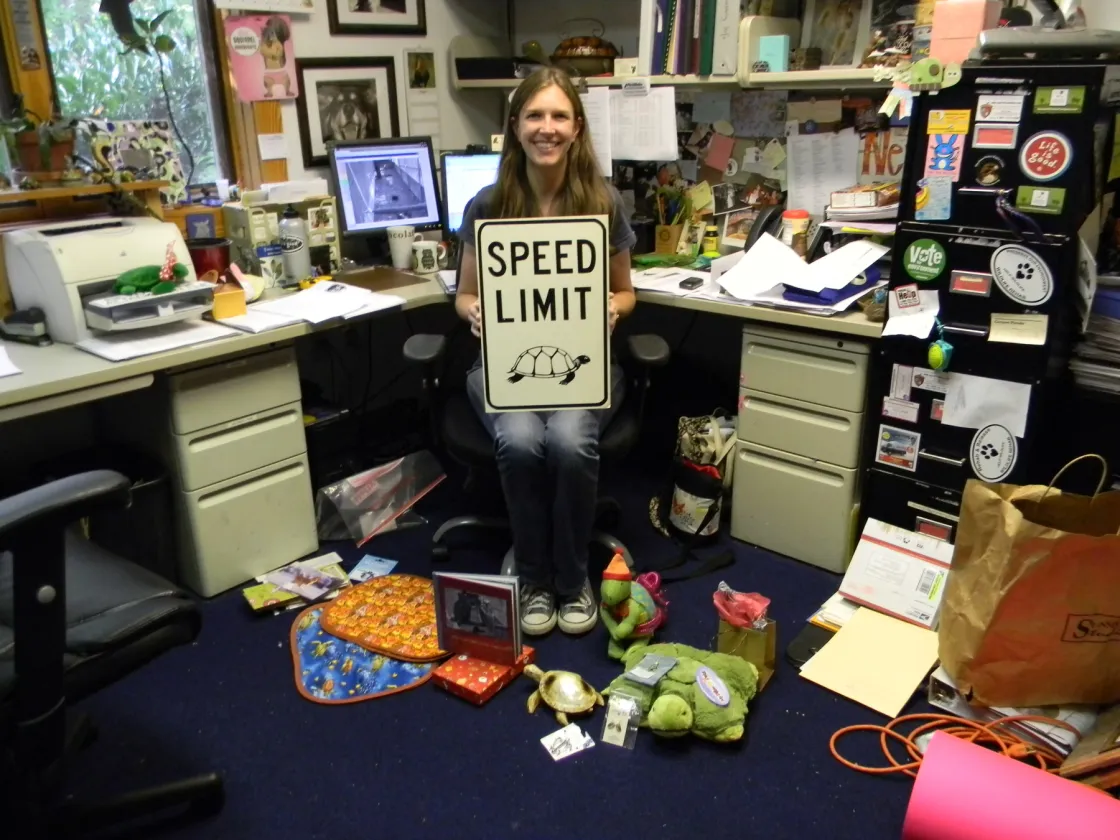
Of course, that changed over time. Technology evolved, and the Center expanded, and so did my role. By 2004, when I began taking on more outreach work and planning the annual Call of the Wild conference, leadership realized I probably needed a desk, a chair, a computer, and somewhere to put all the paper. That office—just to the right of the lobby, before the hospital doors—became my professional home for the next two decades.
This month, I said goodbye to it.
Last year, we began a major project to add new office “pods” on the property—a long-needed solution to create more workspaces for staff and to free up square footage inside the main building for patient care. As our caseload continues to grow, rethinking how we use our physical space is just as important as adding new equipment or refining our protocols. The pods give us room to breathe while allowing critical areas of the hospital to expand.
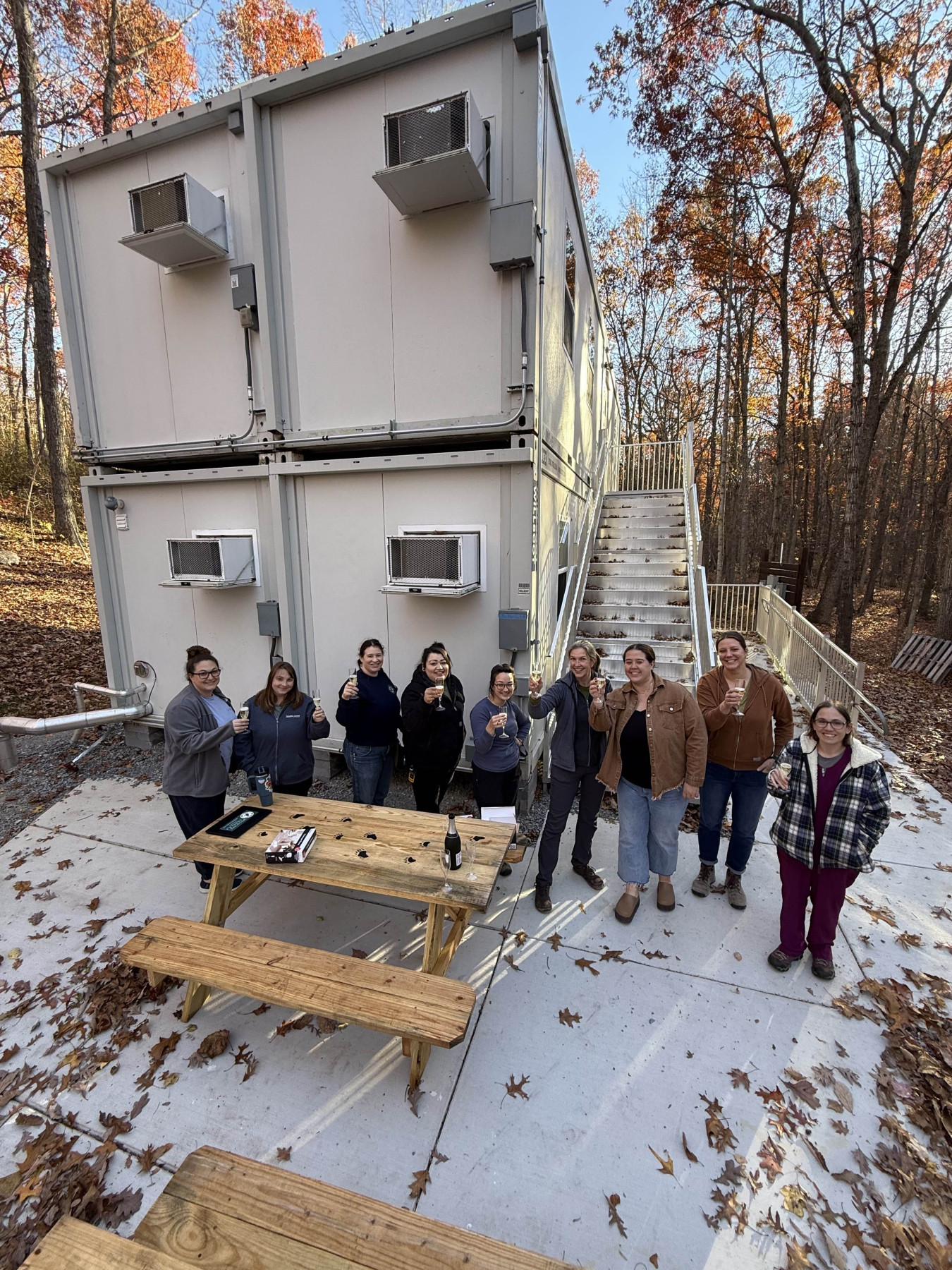
My office was one of the spaces identified for conversion into the Center’s new admissions and triage room.
Operations Manager Amber and I have been working for the past year on the logistical structure of the pods (read: construction chaos), and department heads have been coordinating the move for the past few months—mapping out desks, figuring out where teams would land, thinking through workflow disruptions, and trying to time everything so that nearly the entire staff of 32 could relocate with minimal upheaval. Only four people stayed in their existing offices; the rest of us shifted somewhere new. In focusing on all of that, I had not really paused to think about what it would feel like to leave the space I had worked in for more than twenty years.
Those 132 square feet held so many versions of me: rehabilitator, supervisor, outreach coordinator, director, and now Senior Vice President. They held colleagues who became close friends, interns who became professionals, and countless conversations that shaped the path I’ve taken here. They held stress, surprises, mischievous pranks, the occasional raptor-training session, some tears, and a whole lot of laughter.
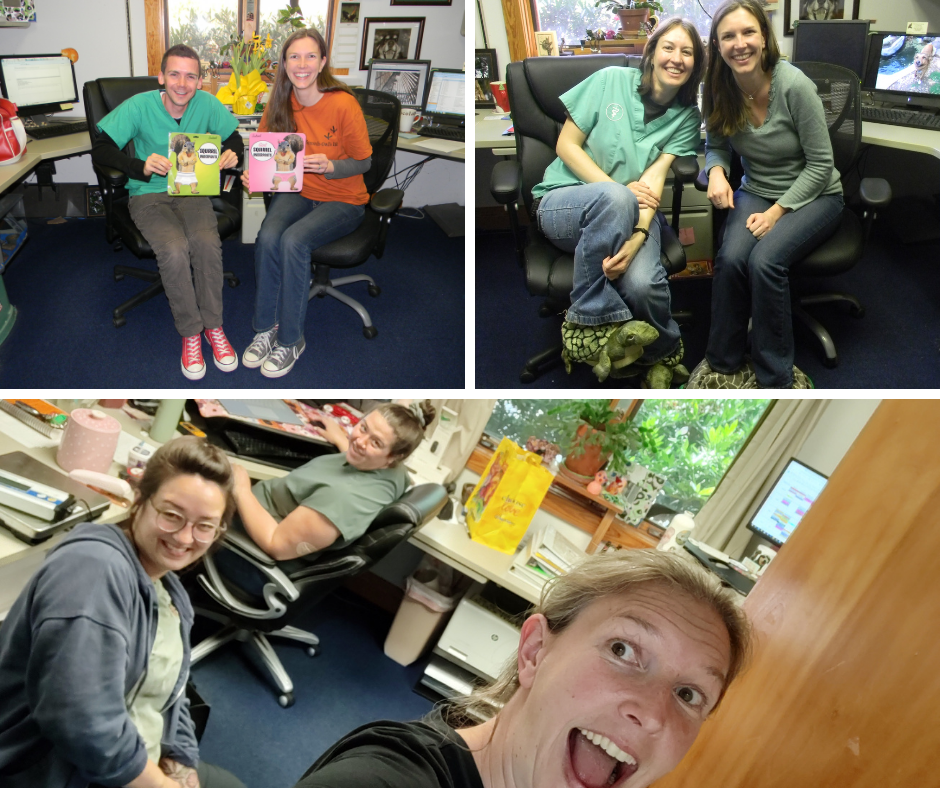
The most recent chapter was the “Cozy Office” era. It truly became “Cozy Office” in early 2023 when Hospital Manager Jess moved in with Dr. Karra and me, creating a space that was cramped, lively, distracting, and full of DoorDash treats. It was chaotic and collaborative in the best possible way—the kind of place where you have the conversations that only happen when you share too many snacks and not enough square footage.
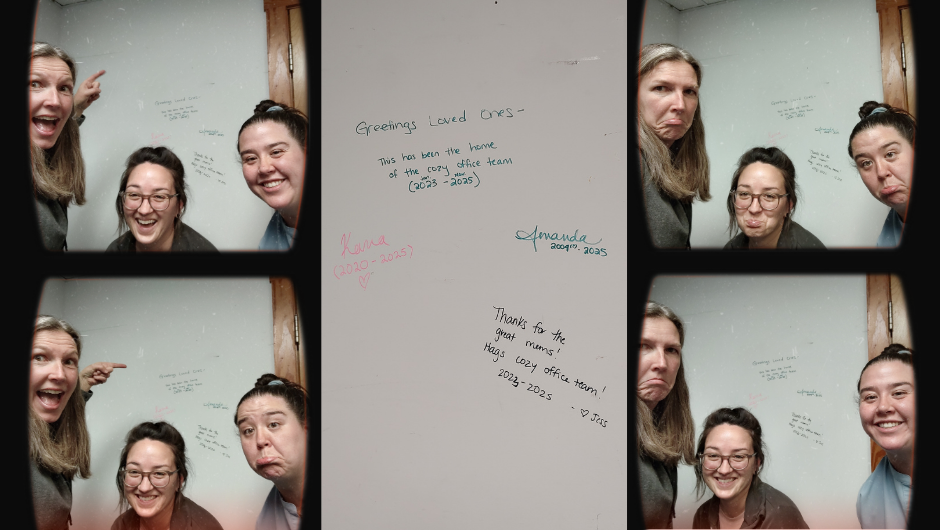
But what comes next feels even more meaningful.
Thanks to generous support at this year’s Gala, my former office will become the Center’s new admissions and triage room. More than 4,000 wild animals will pass through that doorway each year. This is where veterinarians will assess injuries, stabilize patients, make critical decisions, and, when necessary, provide a peaceful end to suffering. It will be a room of beginnings, difficult moments, and hope—exactly what a wildlife hospital requires. The familiar mix of stress, surprises, and teamwork that filled that office will carry forward into this space, only now, it will matter in a different way.
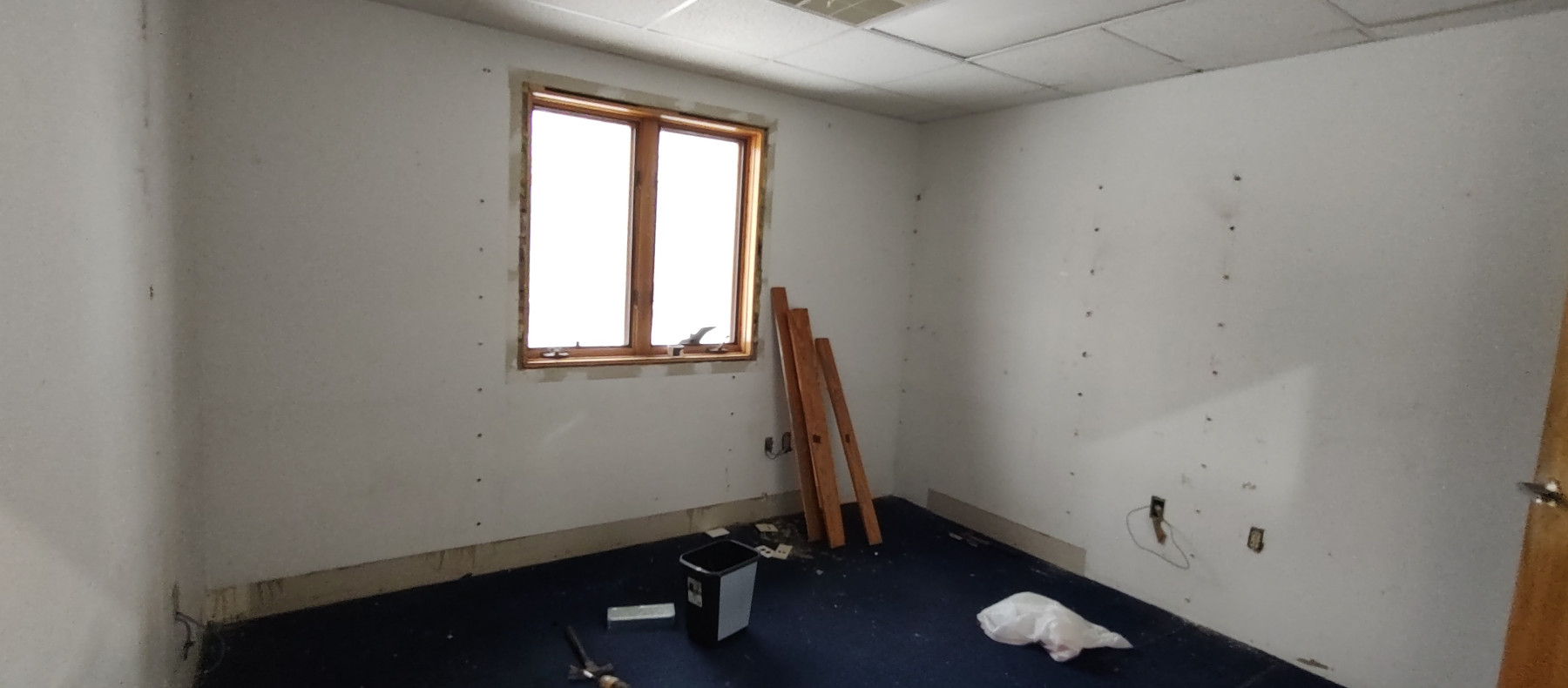
I feel a tug to the right every time I walk in the front door—my body still wants to lead me toward the space that held such a long chapter of my life. Two decades is a long time to turn over to a new purpose. But that purpose is exactly why we are here.
Here is to old memories, new spaces, and the ongoing strengthening of a place—and a mission—that continues to serve wildlife and the people who care about it.
--Amanda Nicholson, Senior Vice President